Indigeno Wine Fair: Parma
Giovanni of Podere Bargnocola and Marco of Crocizia pouring at Indigeno 2026.
Introduction to our Independent Wine Fair Reviews
Hundreds of wine fairs have popped up all over Italy over the past 10 years, yet only a handful attract international wine tourists. The majority of international visitors attend the same predominantly large-scale, white-walled, often corporate-sponsored convention center oriented wine fairs. These larger expos are often logistically complicated for small producers to particpate in and exact a massive financial toll on them with the unconvincing promise of “exposure” for export sales. If it weren't for these smaller fairs surrounding the larger expos, which have little to no entry fees for producers, many Italian winemakers would have stopped participating in fairs altogether.
While reasonable arguments may exist for the commercial perks of migrating annually to gain access to thousands of producers in a single weekend, all in attendance miss out on the joy of getting to know each wine and its maker at a calmer pace. For all intended purposes in this and future guides, the opportunity to have a proper conversation and taste the entire lineup of wines with almost every producer at a fair makes deciding on the most outstanding wines feel less biased.
These small fairs are usually organized by a coalition of like-minded industry veterans and restaurateurs or by the producers themselves who share the same customer circles. Sometimes they are denomination sponsored events where we taste the same few grape varieties from 30-40 different producers. Some are organized by passionate local consumers who invest in presenting their friends' and favorite winemakers. Not all of them are soul-satisfying, but our mission is to light the path for you all and report what good comes our way.
Visiting an independent wine fair is a fantastic addition to your trip through Italy. Sign up for our free newsletter for access to our small wine fair calendar coming this winter. (Link).
Indigeno: Festa del Vino, Delle Persone e dei Territori
I wrote this review back in June 2026 and just getting around to publishing it on the cusp of Autumn because I decided to set out to design two websites on my own. These featured wines are most likely still out there and worth seeking out during your own travels throughout Emilia-Romagna or in the producers respective wine regions.
This was my second time attending Indigeno: Festa del Vino, Delle Persone e dei Territori. (Celebration of Wine, People, and Territories). It’s easily bus-accessible from the Parma train station just outside of the city limits at the countryside event space PWCC owned by the ARCI Nazionale, an association founded in 1957 to organize behind human rights, antifascism and democracy.
I learned about the fair from Giorgia Ingenito, who was working at Emilia Surlì wine fair 9 years ago when we first met. Now in the fairs third year, Giorgia organized a series of events preceding the official events called “Indigeno: On Tour” to Venezia, Campania and Liguria with the goal of engaging with some of the visiting producers home markets and to spread the word about their community organization.
Five Noteworthy Wines
I tasted through a solid 100 wines here, and so many were outstanding and worth revisiting, but I wanted to share these five that warranted two asterisks in my notes.
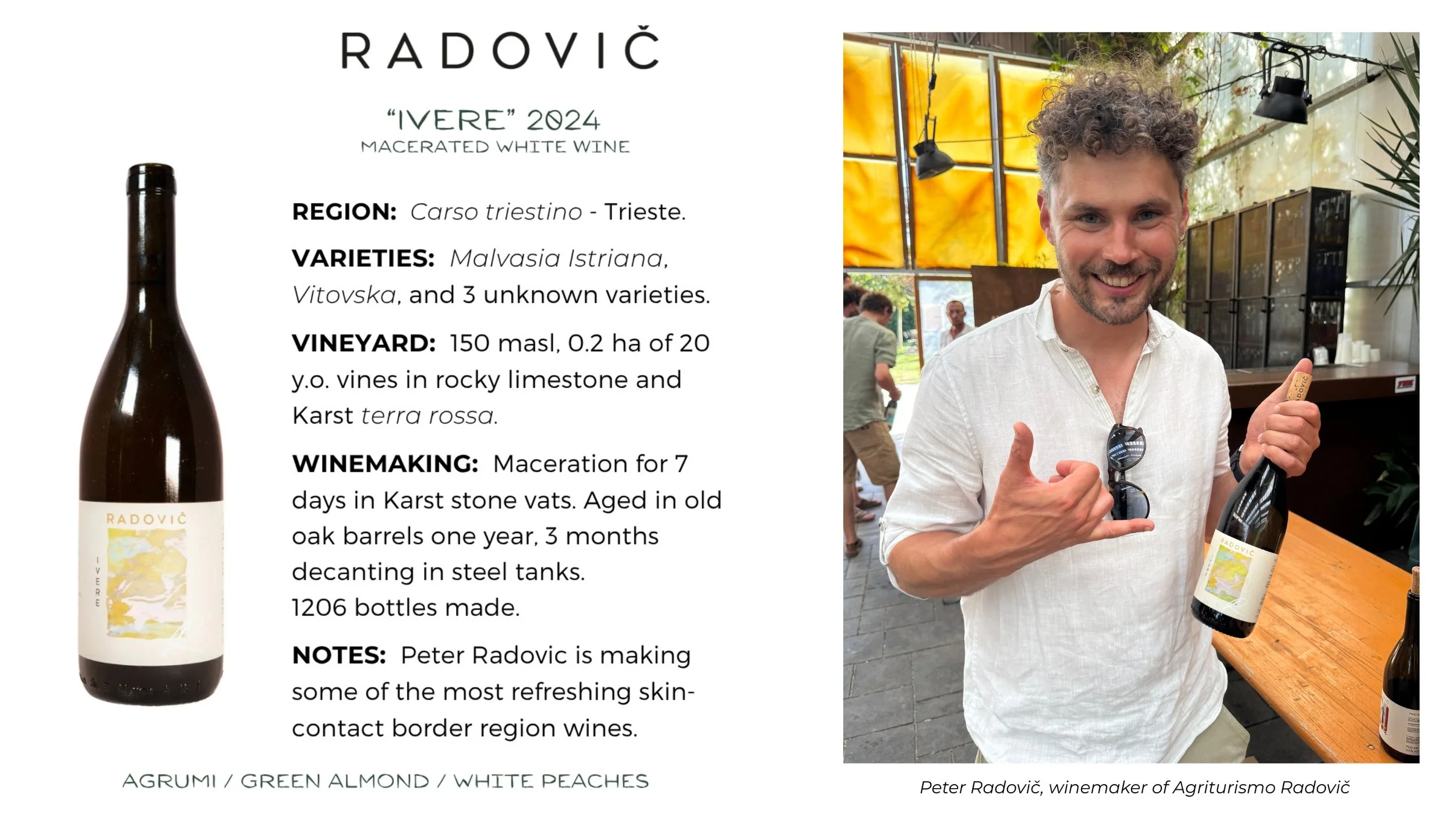
Peter and I first met six years ago after tasting an astounding bottle during one of my Cantine Isole shifts. I had been studying and often visiting the border of Slovenia and Italia started to get overwhelmed by the usual heavy extraction and angular intensity that a lot of these long whole-grape maceration wines impart. At first sip of a Radovič Ribolla Gialla, I had to set the glass down on the counter and take a deep breath of meditative air to breathe out with a smile. All the savoury, stone fruit and tannic components were present, but not dominant. Salinity and freshness undercurrents all of his cuvées and vintages I’ve tasted ever since.
The Radovič family also hosts guests at their overnight agriturismo by reservation and produces excellent extra virgin olive oil from autochthonous cultivars.
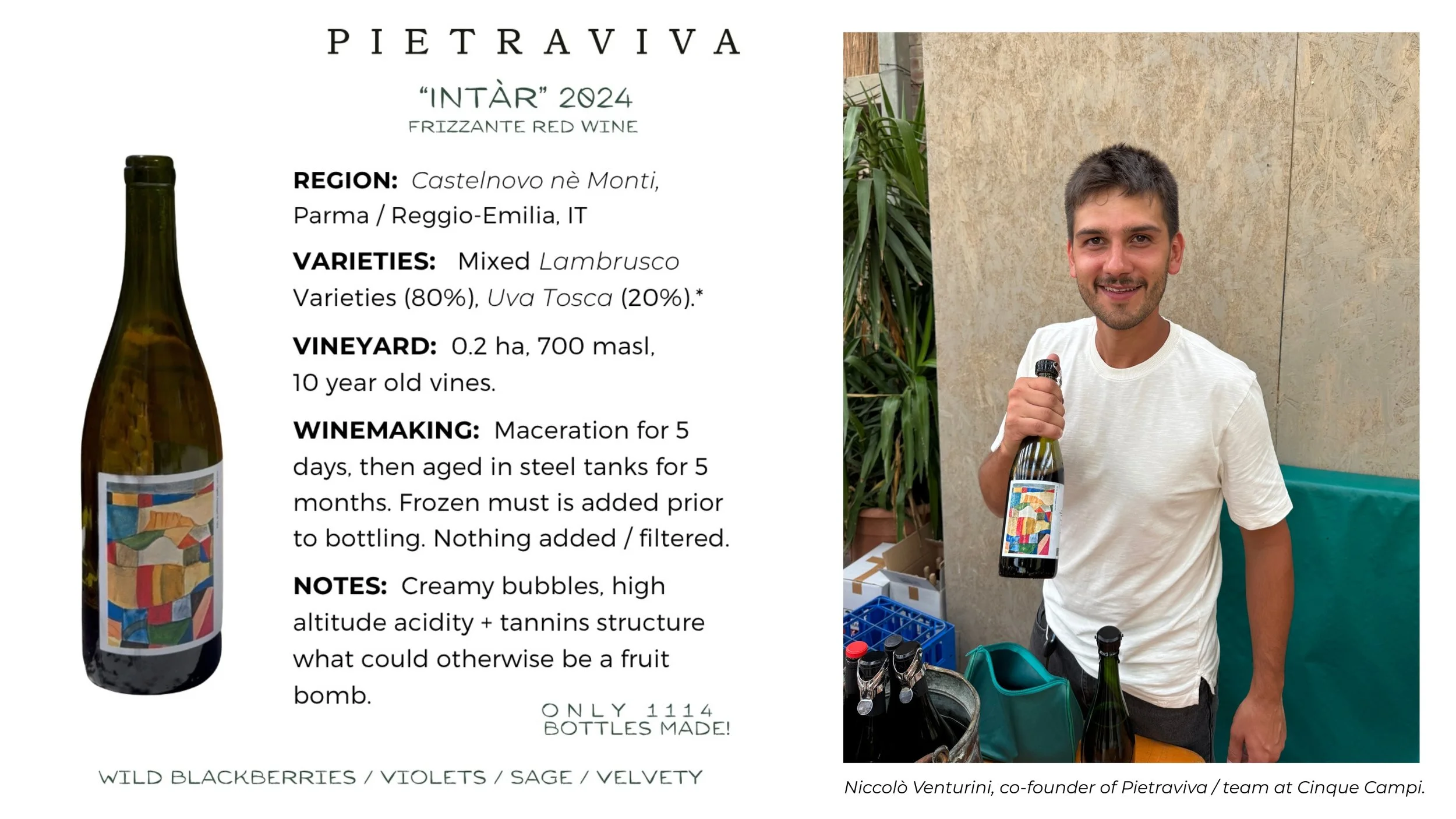
This is the third vintage from Pietraviva that I’ve had the opportunity to indulge in, and on second source, it feels like sitting by a fireplace in the snow-covered mountains.
Although there are some sections of Modena to the south at higher altitudes, there are few examples of Lambrusco grown in these prealpine-esque vineyards in the Apennine mountains an hour drive south from Reggio-Emilia. 700 masl is considerably high even for Valtellina or Trentino, so the acidity is what sets this regions sparkling wines from the rest of Emilia-Romagna. The fortune of hot days under full exposition helps to amplify ripe fruit in the wine to round out the higher acidity.
After years of working in cellars of other winemakers in Emilia like La Stoppa and Cinque Campi, Niccolò e Francesco decided to invest in planting local vine varieties in an unbelievable location.
Victor and I visited them years back atop Castelnovo nè Monti in the middle of the typical January fog and snow after a hot lunch at Il Capolinea. There was so much fog in fact that we couldn’t see the otherworldly view of the Pietra di Bismantova that inspired Dante’s depiction of purgatory. The wines labels feature photos of a local artists various perspectives of this massive plateau painted onto stone.
In June 2026, a tank failure caused Niccolò and Francesco to lose approximately 1,200 liters of wine —amounting to 1,600 bottles, or one-third of their total production; the financial loss amounts to €15,000. Help them get back on their feet with a new tank through gofundme.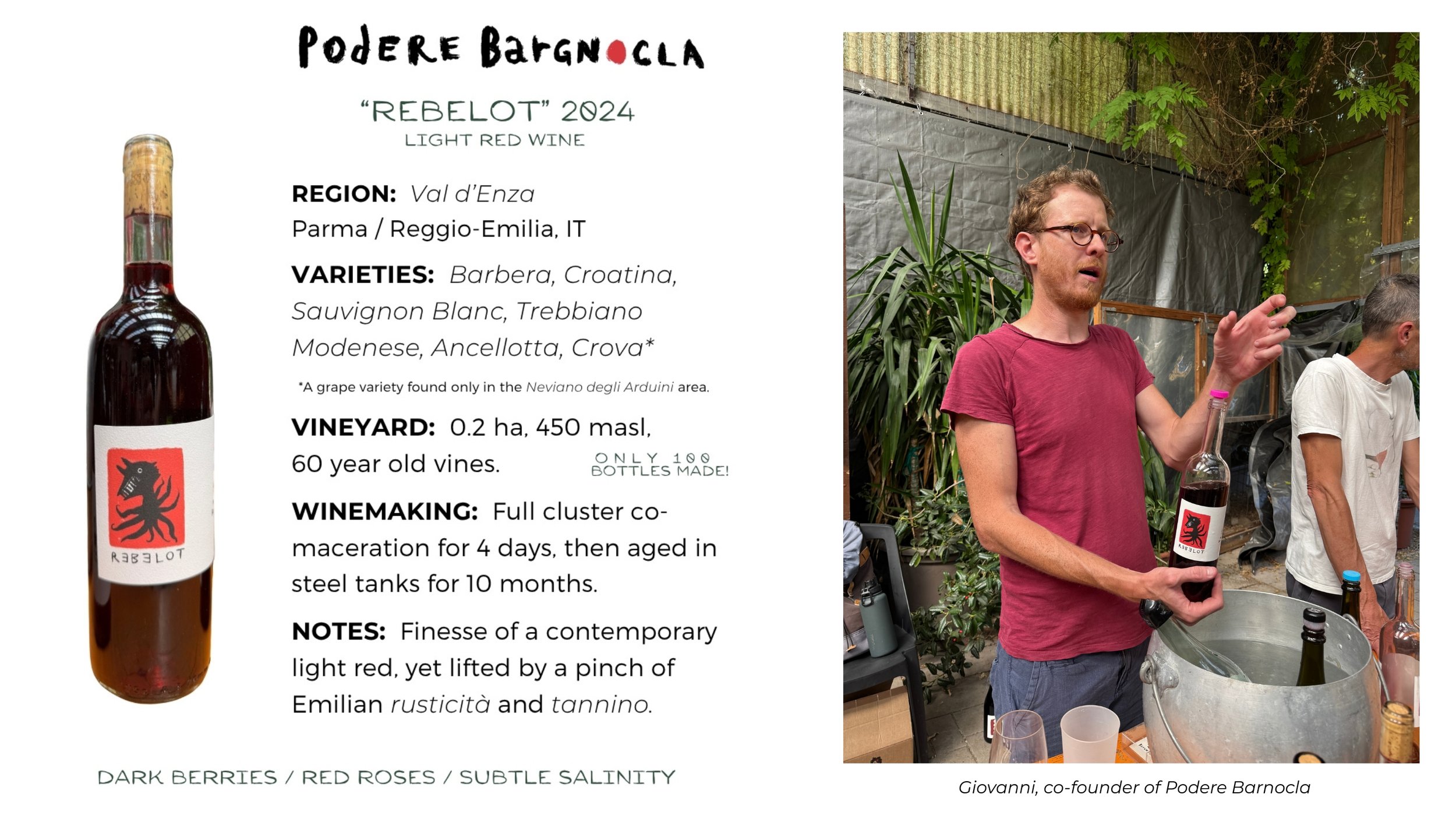
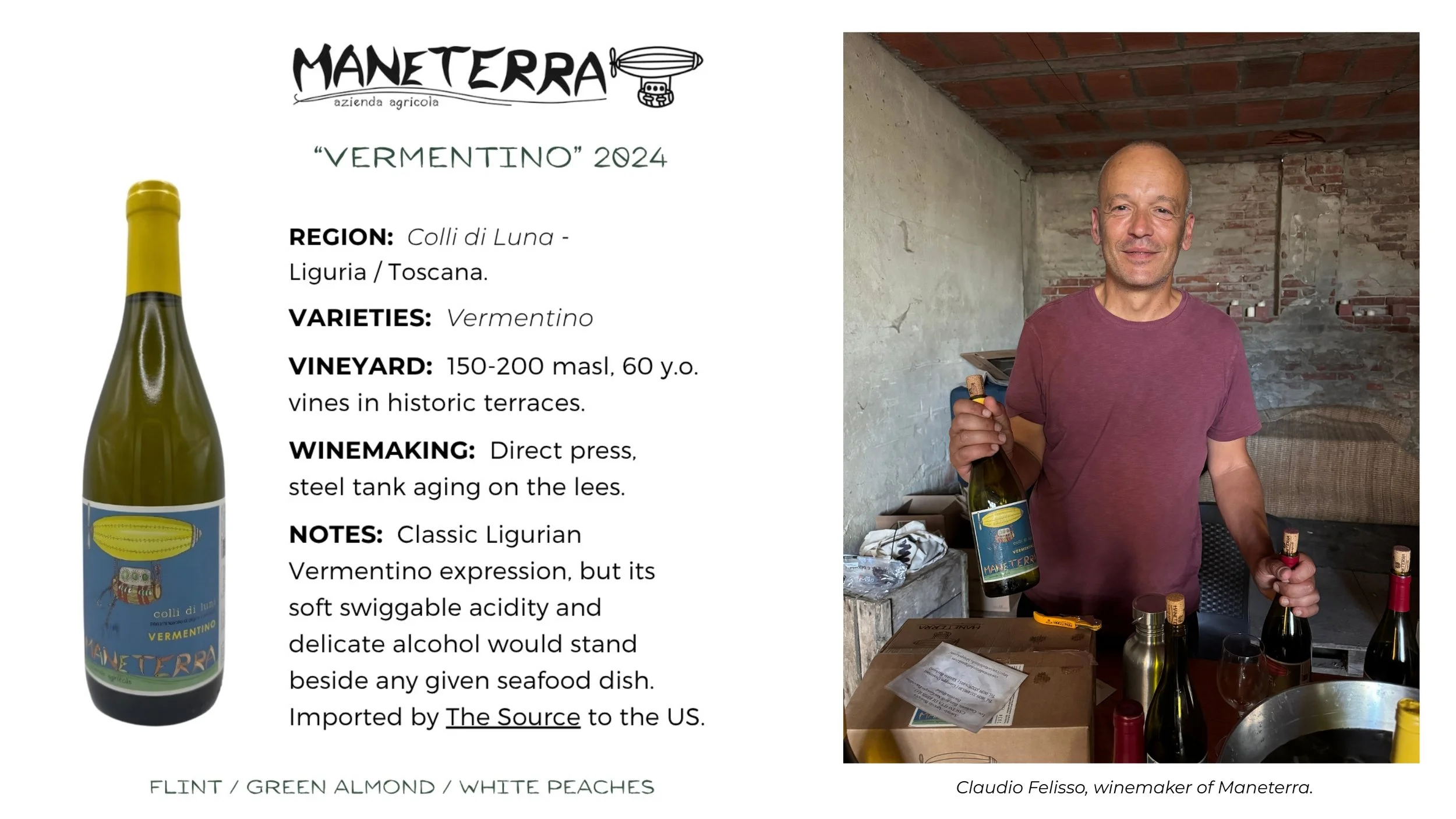
This wine is another one of these hyper-local wines that don’t exist outside of the hillside where it's grown and made. Only 100 bottles of this cuvée were made, but Giovanni and Andrea put all of their energy into tending this quasi-garden of a vineyard to create a full lineup of cuvées. I don’t know how they do it, but after tasting the wines, I see why. I’m looking forward to the first visit so I can learn more and report back.
I met Andrea for the first time at the fair this year, but I’ve known Giovanni for years as he doubles at one of our favorite wine bar refuges in the world, Tabarro of Parma. All of the wines were precise, yet rustic; distinct and delicious.
Their vineyards are in a long river valley called Val d’Enza; the natural confine between Parma and Reggio-Emilia. In the north and center of the valley, you can find legendary winemakers like Camillo Donati, Ca de Noci, or Podere Magia, but Bargnocla is located in the farthest point south of the valley in Neviano degli Arduini.
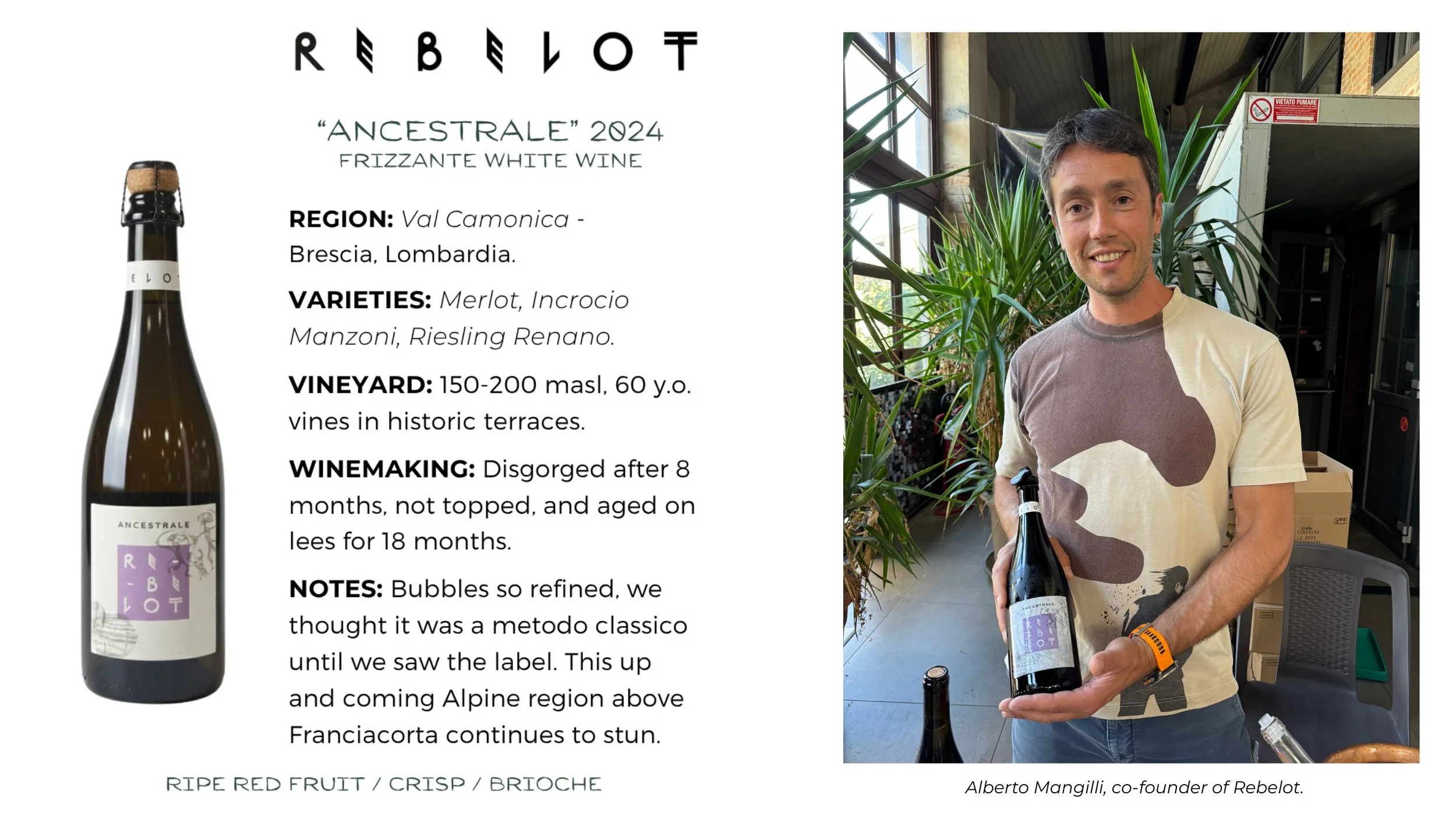
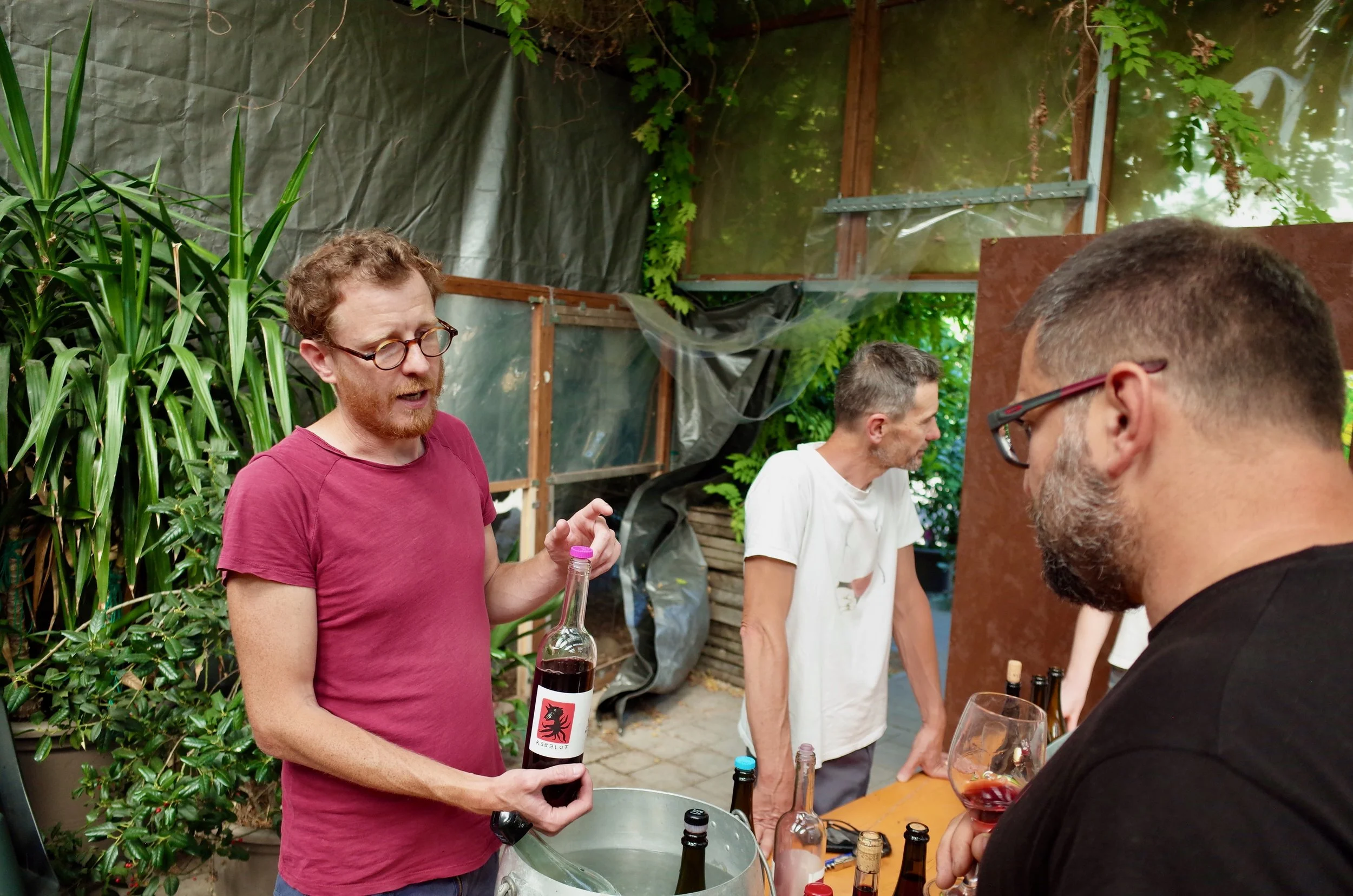
This was my first encounter with any of Rebelot's wines, even though I frequently visit Val Camonica, one of Italy’s hidden Alpine gems, where Alberto and Francesco of Rebelot produce their wines. They invested capital from their careers in law and the banking sector to recuperate abandoned vineyards on high terraces and restore an old stable for vinification. They collectively manage just 2.5 hectares of traditional varieties Incrocio Manzoni (or Manzoni Bianco) and Riesling Renano along with Merlot and new PIWI plantings.
With the winemaking expertise of Roberto Spadaccini, they manage to make five different cuvées: a Riesling Extra-Brut, an Incrocio Manzoni varietal white, a Merlot varietal red, a Merlot Extra-Brut Rosato, and this Brut-Nature blend of all varieties.
We won’t say this often but forget everything you’ve learned about Italian Merlot.
As usual Merlot-dodgers, if we are highlighting it, it’s because the wine-in-question confounded all expectations. No flabby fruit here. Even the red Merlot wine was complemented by Cabernet-like spices, black pepper and pyrazinic compounds like bell peppers, but the ripe red fruit remains persistent.